

From Digital Avatar to Human–AI Partner
Vassily Buzuyev
|
19 August 2026
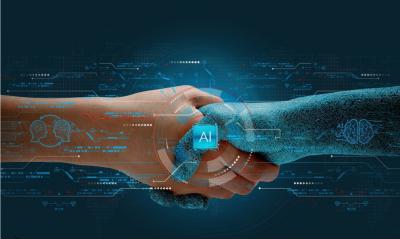
Human and artificial intelligence working together: KAI proposes a new model of collaboration in which AI supports human judgement, preserves knowledge and challenges assumptions rather than replacing human responsibility
Rome – Artificial intelligence is often discussed in terms of what machines may eventually become. For Vassily (Vasyl) Buzuyev, the more urgent question is what humans choose to become alongside them.
Buzuyev, originator of the Globally Integrated Ecosystem for Inclusive Development (EID) and the KAI Initiative, argues that humanity is not suffering from a lack of information but from an inability to manage the enormous volume of knowledge now available. Scientific discoveries, political arguments, commercial persuasion, misinformation, genuine mistakes and machine generated material increasingly occupy the same digital spaces.
The challenge, therefore, is no longer simply finding information. It is establishing where it came from, whether it can be trusted, how it connects to other knowledge and what it means.
This is the thinking behind KAI, an initiative developed from Buzuyev's earlier concept of a digital avatar and now proposed as something considerably more ambitious: a governed human–AI partner designed to preserve knowledge, challenge assumptions, connect complex programmes and help people make better decisions.
The distinction matters. KAI is not being proposed simply as another chatbot with a friendly face. The public avatar is intended to be an interface to a much wider system, capable of maintaining institutional memory, organising a transparent knowledge base, identifying contradictions, testing proposals and communicating complicated ideas to different audiences and in different languages.
For Buzuyev, there is something deliberately modest about this ambition. KAI is not supposed to govern people. It is not an oracle and certainly not a machine authorised to determine what humanity should value. Those decisions must remain human responsibilities.
Its proposed role is instead to make human reasoning more disciplined.
A useful AI partner should be able to say: this assumption is unsupported; this proposal contradicts an earlier commitment; these are the likely unintended consequences; this alternative has not been considered. An AI system that simply confirms the opinions of its creators may be convenient, but it is hardly an intellectual partner.
This is particularly important for large, interconnected programmes. The Globally Integrated Ecosystem for Inclusive Development, or EID, which provides the wider intellectual framework behind the initiative, seeks to connect areas such as education, health, governance, entrepreneurship, finance, logistics, innovation and digital infrastructure. Such an approach inevitably creates a problem of complexity. The more components a programme contains, the easier it becomes for its original purpose to be forgotten.
That is where institutional memory becomes more important than technological spectacle.
KAI is therefore envisaged partly as an archivist and librarian. It would maintain a canonical register of sources, approved versions of documents, a common glossary, records of important decisions, dissenting views and corrections. These may sound like mundane functions compared with a talking digital personality, but they could ultimately prove more valuable.
Human institutions regularly lose knowledge when staff change, founders depart or new partners arrive. The consequences are familiar: decisions are repeated, mistakes are forgotten and projects gradually drift away from their original objectives.
A machine that remembers does not automatically solve this problem. But a governed system designed to preserve institutional memory could make it considerably harder to ignore.
The same principle applies to public communication. The earlier digital avatar remains relevant because complex ideas need to be translated for different audiences. A serious proposition might require a two minute video for the general public, a longer lecture for students, a professional briefing for policymakers and a detailed discussion for researchers. The challenge is to change the language without changing the underlying meaning.
That requires transparency.
The proposed longer term idea of a Verifiable Information Channel is therefore particularly interesting. The choice of the word “verifiable” rather than “true” is important. No institution, human or artificial, should claim a monopoly on truth. Trust should instead be built through visible sources, distinctions between facts and hypotheses, explicit value judgements, declared uncertainty, correction histories and serious consideration of alternative interpretations.
This could offer a useful counterpoint to the increasingly blurred boundary between information and persuasion online.
But KAI will ultimately be judged not by its philosophy but by its behaviour.
That is why the proposed first stage is deliberately limited. A public media pilot could produce a small series of carefully sourced videos explaining the initiative's central ideas. The objective would not be to chase viral numbers. It would be to discover whether people understand the material, where they misunderstand it, what questions they ask and whether the project can attract people capable of improving it.
Alongside this, an Institutional Design Lab could provide a more demanding test. Institutional proposals should not be protected simply because their authors believe in them. They should be modelled, challenged and stress tested. Different institutional architectures should be compared, assumptions examined and evidence allowed to change conclusions.
The same rules should apply to KAI itself.
Its artificial nature should be openly acknowledged. Its collective authorship should be transparent. Its early public statements should remain under identifiable human editorial responsibility. Any expansion of its functional autonomy should depend on evidence, governance and safety rather than enthusiasm.
This is where the project faces its most difficult challenge.
It is relatively easy to imagine an AI that speaks fluently. It is much harder to create one that remembers accurately, distinguishes evidence from opinion, acknowledges uncertainty and is genuinely permitted to disagree with those who created it.
The proposed Founding Circle is therefore potentially more important than the avatar itself. Bringing together expertise from artificial intelligence, law, education, philosophy, psychology, media, systems engineering and practical development would help prevent the project from becoming the product of a single intellectual perspective.
The metaphor of “parents” used by the initiative is revealing. The objective should not be to create an obedient digital child that repeats the beliefs of its creators. It should be to develop a system capable of remembering, questioning and, eventually, helping its creators recognise where their own thinking needs improvement.
There is also an important irony here. Buzuyev's proposal for a new model of human–AI collaboration is itself being developed with the assistance of AI.
But perhaps that is precisely why it deserves to be tested.
The most interesting applications of artificial intelligence may not be those in which humans hand over responsibility to machines. They may be those in which humans use machines to become more rigorous, more reflective and more capable of dealing with complexity.
A society that treats AI as an unquestionable authority risks creating a new form of dependence. A society that treats it merely as a faster search engine may miss much of its potential.
There is a third possibility: a disciplined partnership in which humans retain responsibility while AI helps preserve context, challenge reasoning and make complexity more manageable.
KAI is Buzuyev's attempt to explore that possibility.
Its ambition is undoubtedly large. But the sensible way to approach a project of this scale is not to begin with grand declarations about artificial intelligence transforming humanity. It is to begin with something much simpler: publish the idea, test it, listen to criticism, correct mistakes and build institutions around the experiment.
If KAI eventually proves useful, it will not be because its creators declared it intelligent or authoritative.
It will be because humans learned how to work with it responsibly.
The future of AI may therefore depend on a question that is less technological than political and philosophical
Can we build machines that do not replace human judgement, but help us exercise it better?
For Buzuyev, KAI's answer is an invitation to try.
By Vassily Buzuyev
PS
© COPYRIGHT LVIV INSIDER
UNAUTHORISED REPRODUCTION FORBIDDEN