

Comment: Ukraine could signal the onset of Russia’s long decline, much as Crimea once did
Renzo Cianfanelli
|
24 July 2026
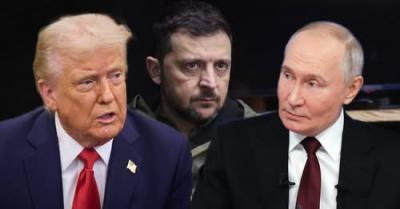
Vladmir Putin
ROME -- History rarely repeats itself, but it often echoes with uncomfortable clarity. Russia’s disastrous Crimean War of 1853–56 marked the beginning of the end of its pretensions to unquestioned great-power status. Military defeat exposed economic backwardness, diplomatic isolation and administrative decay. Tsar Alexander II responded with sweeping reforms, including the emancipation of the serfs. They modernized Russia only partially while unleashing social forces that the autocracy could no longer control. Within a generation, revolutionary violence had become a permanent feature of Russian politics.
Vladimir Putin’s invasion of Ukraine may prove to be another such turning point. The parallels are imperfect but striking. Once again, the Kremlin embarked on a war expecting a rapid victory. Instead, it has become trapped in a frankly shameful and costly conflict of attrition, with no convincing path for both sides to a decisive success. The Russian invaders, who have made virtually no advance on the frontline since last year, are suffering up to 30,000 casualties every month, destroying civilian targets in Ukrainian cities including Kyiv with missiles. Ukraine intensifies its drone attacks on Russia hitting targets up to faraway Siberia, 2,000 miles away.
Not for the first time in history, the Ukrainian war is turning into an unmitigated disaster. Even a ceasefire at this point is unlikely.
The strategic consequences of this conflict are already profound. Putin’s hope to restore Russia’s greatness as a nuclear superpower dealing with America and China as equals is a mirage. The country in fact has become increasingly dependent on China for markets, technology and diplomatic support. The relationship is officially described as a partnership of equals when in reality, the balance has shifted sharply in Beijing’s favour. A country that once claimed to be one of the world’s independent poles of power risks becoming China’s junior strategic partner—a polite expression for growing dependence.
Unlike the aftermath of the 19th century Crimean War, today’s Russia is not going to react to the failure of the Ukrainian blitzkrieg with a belated volley of reforms. The Kremlin has chosen control over liberalism, centralization over experimentation, and partial mobilization over renewal. Such retrenchment may preserve the regime for a considerable time. It is unlikely however, to restore Russia’s long-term economic vitality or strategic autonomy.
History suggests that prolonged, inconclusive wars rarely strengthen autocratic systems indefinitely. They exhaust resources, narrow political choices and steadily erode the confidence on which authoritarian power ultimately rests. The first Crimean War did not destroy Imperial Russia overnight. But it marked the beginning of a long period of decline from which the empire never fully recovered.
The second Crimean War may not end in military defeat either. Yet it could still become the moment when historians conclude that Russia ceased to be an independent great power and entered a prolonged era of strategic dependence on China. That would be an outcome as consequential as any battlefield victory or defeat.
This article first appeared in La Voce di New York
Renzo Cianfanelli is an award-winning global correspondent-at-large. For Corriere della Sera he served as resident correspondent and Bureau Chief in London, New York, Belgrade and Moscow.
© COPYRIGHT LVIV INSIDER
UNAUTHORISED REPRODUCTION FORBIDDEN