

Diplomatic mess at the Fencing World Championships
INSIDER NEWSDESK
|
21 July 2023
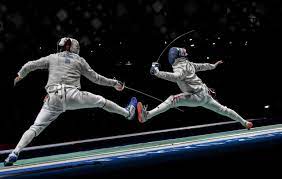
Fencing
MILAN - - A tricky diplomatic situation has ensued following Russia’s reinstatement at the Fencing World Championships in Milan while Kiev has boycotted the event.
Seven Russian athletes are on Italian soil for ten days as part of the controversial Fencing World Championships, currently underway in the northern city. The Meloni government, decidedly Atlanticist in the international geopolitical chessboard, has been forced to cast a thought for the Milan-Cortina '26 Winter Olympics.
The indignant Ukraine, which does not accept concessions to Moscow, has withdrawn some of its athletes. Russia was also furious, because has lost its anthem, flag, teams and best champions.
Italian newspaper Il Fatto Quotidiano argues that all are disgruntled and many of the events have been ruined because in several disciplines the best will be missing on the piste. The Fencing World Championships 2023, more than a major international event, will be a sporting mess and a half diplomatic case, according to Fatto.
On Saturday the event starts in Milan: at the Allianz Mico Fiera Congressi, under the eyes of the sports world and the President of the Republic, Sergio Mattarella, expected at the opening ceremony, the best fencers on the planet from 158 countries will compete.
This will include Russia and Ukraine, in a high-tension crossroads: the former will only be able to participate with second-ranking athletes, the few who have passed the 'neutrality' check imposed by international rules; the latter will, in response, boycott the competitions in which Russia is participating.
Italy was convinced that it would host the prestigious event, one of the main events of the sporting summer together with the Fukuoka World Swimming Championships.
The Fencing World Championships are also key in terms of Olympic qualification, in a discipline that is crucial for the Italian medal haul, not to mention the marketing spin-offs for Milan and the social impact on the region.
The event has cost 5.6 million euros, three million of which the state provided in March. It is the first major international competition under the aegis of the Federations with the return of the Russians (and Belarusians), which was strongly desired by the International Olympic Committee (IOC) and opposed by the countries of the Western bloc (including Italy).
In the end, this tense political situation was reluctantly accepted by the Meloni government which has been forced to grant visas to seven Russian and Belarussian athletes who will be in Italy for the next ten days.
Last March, the IOC, which had sided against the Russians competing at the start of the war, changed its line: yes to participation as long as the country remained neutral, i.e. without teams or flags and with no connection to the government.
This was a pirouette dictated by economic and sporting interests in view of the upcoming Paris 2024 Games. Obviously, the indication has not been accepted peacefully, Fatto adds.
First of all, because it is difficult to apply the concept of neutrality to a sports system and the IOC itself has indicated the exclusion of athletes belonging to the armed forces. But then some countries and Federations do not agree: World Aquatics is studying the directive and at the World Swimming Championships in Fukuoka the Russians will not be there.
Minister Abodi and international fencing regent Katsiadaki grudgingly accepted the compromise of 'neutral participation', Fatto explains.
The result, however, sportingly speaking is still a mess. Only seven Russian athletes have passed the independence cross-check carried out by a third company. These are all second-rate youngsters, with few hopes of victory because the best are linked to military groups, the Italian paper concludes.
At least the team competitions, the most important in fencing, are saved because Russia is excluded there. The World Championships can begin, in the hope of no further diplomatic incidents.
es
© COPYRIGHT LVIV INSIDER
UNAUTHORISED REPRODUCTION FORBIDDEN