

Tunisian tennis star carved pioneering path despite Wimbledon disappointment
Michael Mewshaw
|
17 July 2023
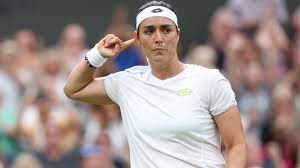
Ons Jabeur
By Michael Mewshaw
Tennis has had a luminous history of players overcoming political adversity which would cripple less resolute souls. There was the German Wolfgang von Kramm who struggled to stay on the tour despite Nazi threats to blackmail him for his sexual orientation. Althea Gibson and Arthur Ashe later bravely broke new ground, overcoming the sport’s racial prejudices. Before the fall of the Berlin Wall, dozens of Eastern European men and women negotiated the obstacle course created by Communist regimes and ultimately won the right to keep their prize money rather than forfeit it to national federations. More recently, a constellation of Serbian stars, including Novak Djokovic, practiced in empty swimming pools as NATO bombs dropped on their country.
Now Ons Jabeur not only joins this illustrious roster of players who have triumphed over political challenges, she jumps to the head of the line. At a time when fear of Islamic terrorism and animosity toward North Africans seems all pervasive, Jabeur, a 28-year-old Tunisian, has become a fixture on the tour, a top ten competitor, and a frequent title winner.
Coming from a culture and a Moslem country where many women remain veiled and would never appear in public with bare legs, Ons challenges traditions every time she takes the court in a tennis dress. Although liberal compared to its neighbors, Algeria and Libya, Tunisia was where the Arab Spring started, quickly spreading revolution throughout the Arab world.
Jabeur grew up and developed into a top ranked player during a period of frightening turbulence and street violence. Al Qaeda in Islamic Magrheb (AQIM) and ISIS continue to this day to convulse her home country. In recent years dozens of foreign tourists were killed by terrorists at a popular beach resort in Tunis, then later at the Bardo Museum. In 2011, during the tumult of the Arab Spring, Ons Jabeur showed up in Paris and won the Junior Girls Singles Title. Rather than a smooth path to success, this early title led to more hurdles. Jabeur suffered injuries and had trouble concentrating on her game and covering her traveland coaching expenses. But then she received a $50,000 grant from the Grand Slam Development Fund. As Jabeur says, “Of course it changed everything. First, I don’t have to think about the money. I just have to focus on tennis.”
Grateful for her good luck, displaying a positive attitude and a self-deprecating sense of humor, she claimed she no longer felt under pressure because, “When I win, I represent the Arab world. When I lose, I try to be just Ons Jabeur.” More seriously, she added, “For me, it is not only about Tunisia anymore, it’s all about the Arab country [and the] African continent.
Because tournaments sometimes fall during Ramadan, the Moslem month of prayer and sacrifice when eating and drinking are forbidden from daybreak until sundown, Jabeur has to arrange for a religious dispensation and postpone her fasting until after the tournament. For her this is just another challenge she has to cope with. It’s difficult to imagine any other player in a sport notorious for its entitled divas dealing with half the problems Jabeur has endured and gone on to prevail over. Last year she made it to the finals of Wimbledon as well as the US Open. Although she lost in both matches, she seems to have viewed those setbacks as just two more rungs on the ladder to success. To reach the championship round at Wimbledon this year, she had to beat former champ, Petra Kvitova, and Elena Rybakina in the quarterfinals. Then in the semi-finals against Aryna Sabalenka she had to rebound from losing the first set and fight to win the match.
In the final she met a surprising opponent, Marketa Vondrousova, a 24-year-old Czech whose arms are festooned with random abstract tattoos reminiscent of a Cy Twombly painting. By contrast, Jabeur, unlike many women in Tunisia, is immaculately unmarked. In most other respects, the women were mirror images of one another. Rather than depend on power and speed of shot, they traded clever placements, drop shots and lobs. Usually this is the recipe that Jabeur employs to good effect. But on this occasion, Vondrousova proved the superior tactician, slicing and dicing groundstrokes, giving Jabeur fits and causing her to commit 31 unforced errors. After the match ended 6-4/6-4 in Marketa Vondrousova’s favor,Jabeur was reduced to tears, but recovered in an on-court interview to promise that she would win Wimbledon one day. Vondrousova in turn vowed that she’d celebrate by getting a new tattoo.
mm-es
Jabeur
© COPYRIGHT LVIV INSIDER
UNAUTHORISED REPRODUCTION FORBIDDEN